
Feeling I needed a detox, I gave the 3-Day Water Fast another go. The first time I tried, I got terrible stomach cramps in the first 1.5 days. I couldn’t do it. Then, it dawned on me that I was missing minerals and electrolytes. Since then, I’ve done 2 successful 3-day water fasts, and both have been incredible!
DISCLAIMER: I’m not a doctor. Please check with a medical professional before attempting this. Every body is different, so it might not be right for you!

Tips for Survival
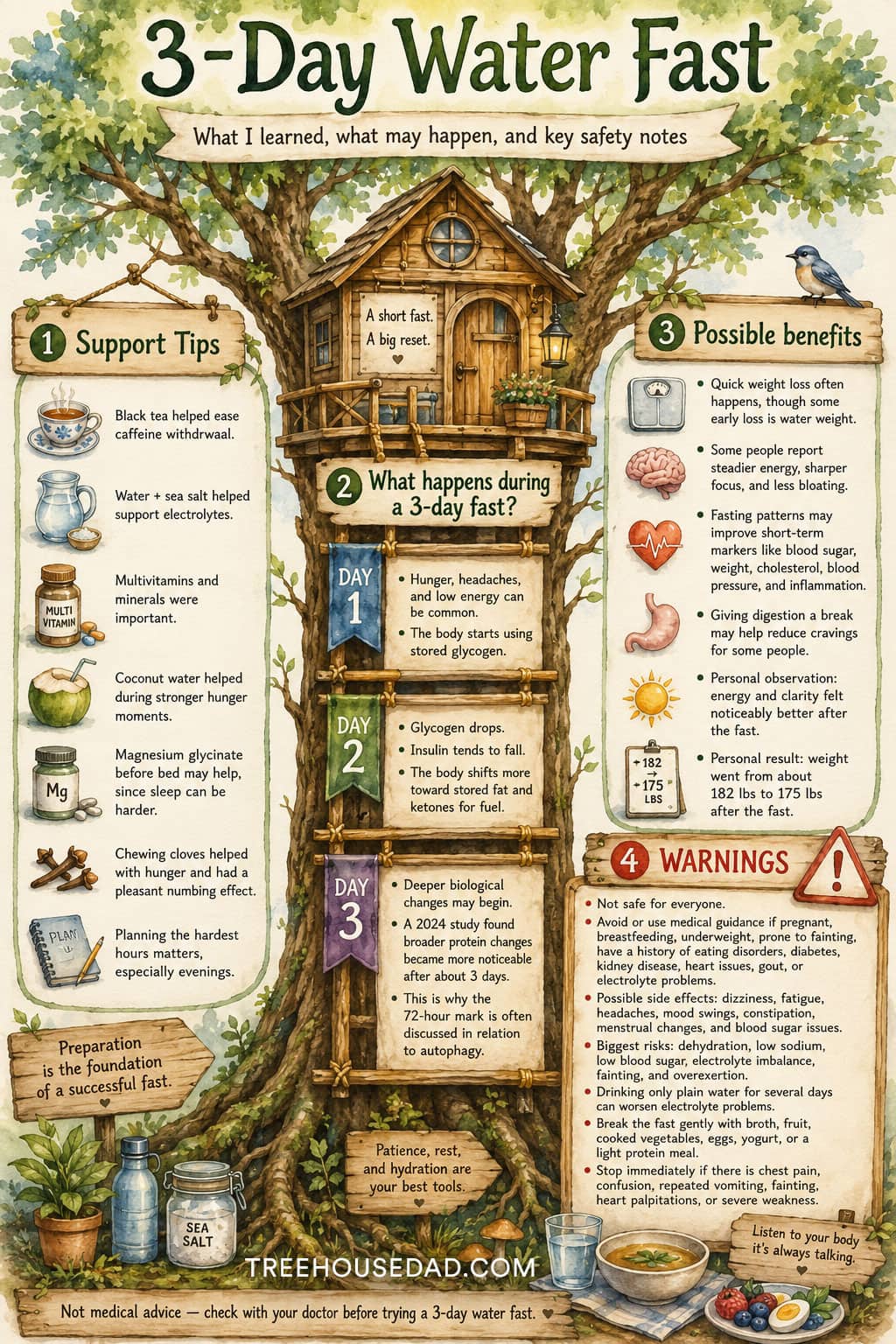
SO, here are some tips that helped me get through it:
- Breakfast – black tea, other wise my head would explode without coffee.
- Water with Salt – I have a 1 gallon jug of water on my desk, that I carry around the house too. It’s got a tablespoon or so of good sea salt in it.
- Multi-Vitamin – I take some vitamins and multi-minerals.
- Coconut Water – Whenever I’m really feeling hungry, I down a glass of it. I tried to not have more than 2 glasses a day.
- Magnesium Glycinate – I take some before bed. One of the side effects is not sleeping well. My 3rd night was hard.
- Don’t Complain – Whatever you do, don’t gripe all day about how hard it is. The less the people around you know about it, the easier it is. You don’t wanna keep talking about it.
Optional Intentionality
Planning is everything. I learned the hard way on this last fast.
- Make it a proper detox – Next time I’ll be taking charcoal as well as taking anti-parasite natural medicines like black walnut, clove, garlic, wormwood, oregano oil, and papaya seeds.
- Chew Cloves – One thing I did get right, and began to like, on this last challenge was chewing on cloves. Anytime I was feeling extra hungry, I’d pop one in my mouth and slowly work it down. It has a weird numbing property, and the flavor was nice. They’re supposed to be good for lots of things, but I was mainly attracted to their anti-inflammatory claims.
- Planning the Hard Times – In the future, I’ll be planning the hardest moments better. Also, I’ll be doing it during the week while working. At least when working, I’m distracted. My hardest times were both the 2nd and 3rd day during the evenings. The last evening, I tend to cook for hours, so that my first meal is perfect. Next time, I’ll order something healthy for take out and be alone for a few hours. I was hangry to the point of danger. It’s a good idea next time that I spend the time alone. Not worth ruining a family relationship by exploding and yelling. Grateful I didn’t, but I was fuming.
Observations
Energy
I’m only a few days into recovery from this last one, but I have a lot of energy and clarity. The last time, I felt uniquely amazing for almost 3 weeks before feeling the same as before.
Habits
Every single time I do any of these challenges, I change my daily/weekly habits a bit (for the better.) This time, I’ve cut sugar almost completely. I have no interest in it. The only sugar I’m doing now are in naturally grown carbs like sweet potatoes and a touch of honey in my tea before bed.
In the past, this fast has helped me handle daily intermittent fasting. Today, I got in an hour of working out, errands and a few hours of work before my first meal at 1pm. Usually that’s near impossible. Usually, I’ll eat at 11am, then have snacks an hour later. Right now I feel great and can hold till dinner.
I’m also better about taking my supplements. When pilled minerals are your only stave from stomach cramps, it’s easy to remember them. Good habit with high quality brands. I’m also munching on cloves through the day.
Weight Loss
Starting the fast, I was around 182 lbs. I’m not doing this to lose weight, but it’s interesting watching how much food weight we hold at any given time. After the fast, I was at 175 lbs. Then, each day after (and even though I’ve been eating) I’ve lost a pound per day. I think my geared-up metabolism combined with daily cardio workouts has helped me burn more. If I can keep at 175, I’d be pumped. I’ll keep updating here.
Why do a water fast?
By the second or third day of a water fast, the body has usually burned through much of its stored glycogen, the backup carbohydrate kept in the liver and muscles. As glycogen drops, insulin levels tend to fall and the body shifts toward using stored fat and ketones for fuel. That’s one reason people often notice quick weight loss during a 3-day fast, though some of that early drop is water, not pure fat. The Mayo Clinic notes that fasting patterns may improve short-term markers like blood sugar, weight, cholesterol, blood pressure, and inflammation, though long-term effects are still less clear.
A 3-day fast may also push the body into a deeper “cell cleanup” state, often called autophagy. This is the process where cells break down and recycle worn-out parts. Human data is still young, but a 2024 fasting study found that system-wide protein changes became more noticeable after about three days without calories, suggesting that the 72-hour mark may be a real turning point for deeper biological shifts.
There’s also a metabolic benefit people don’t always think about, fasting gives the digestive system a break from constant incoming food. During that pause, the body isn’t spending as much energy processing meals, managing blood sugar spikes, and storing nutrients. Some people report steadier energy, sharper focus, less bloating, and fewer cravings after the first rough day or two, though personal responses vary a lot.
Another interesting piece is inflammation. Chronic inflammation is thought to be one of the short-term health markers that may improve with intermittent fasting patterns. A 3-day water fast is more intense than common intermittent fasting, so it shouldn’t be treated casually, but the same general pathway may be part of why people use longer fasts for metabolic resets.
Warnings
A 3-day water fast isn’t safe for everyone. Skip it, or only do it with medical guidance, if you’re pregnant, breastfeeding, underweight, prone to fainting, have an eating disorder history, have diabetes, take blood sugar or blood pressure medication, have kidney disease, heart issues, gout, or a history of electrolyte problems. Mayo Clinic specifically warns that fasting may cause dizziness, fatigue, headaches, mood swings, constipation, menstrual changes, and problems with diabetes management.
The biggest risks are dehydration, low sodium, low blood sugar, electrolyte imbalance, fainting, and overexertion. Drinking plain water without minerals for several days can sometimes make electrolyte issues worse, especially if you’re sweating, exercising, using sauna, or drinking excessive amounts of water.
Breaking the fast matters. After three days, don’t jump straight into a huge meal, alcohol, fried foods, or a heavy sugar load. Start small, think broth, fruit, cooked vegetables, eggs, yogurt, or a light protein meal, then build back up. Stop the fast if you feel chest pain, confusion, severe weakness, repeated vomiting, fainting, heart palpitations, or symptoms that feel beyond normal hunger.
Again, I’m not a doctor, so check with yours before trying this.











I’ve read this a few times….it’s very motivating. I’ve done the 3 day fast before but not with these great tips. I’m going to try this on my next 3 day fast. Thanks!
Mahalo Anna! Keep me updated. I’ll be doing another in about a month. I could use another reset!